Securing etcd cluster
This document will describe all the TLS artifacts that are typically generated for setting up etcd-druid and etcd clusters in Gardener clusters. You can take inspiration from this and decide which communication lines are essential to be TLS enabled.
Communication lines
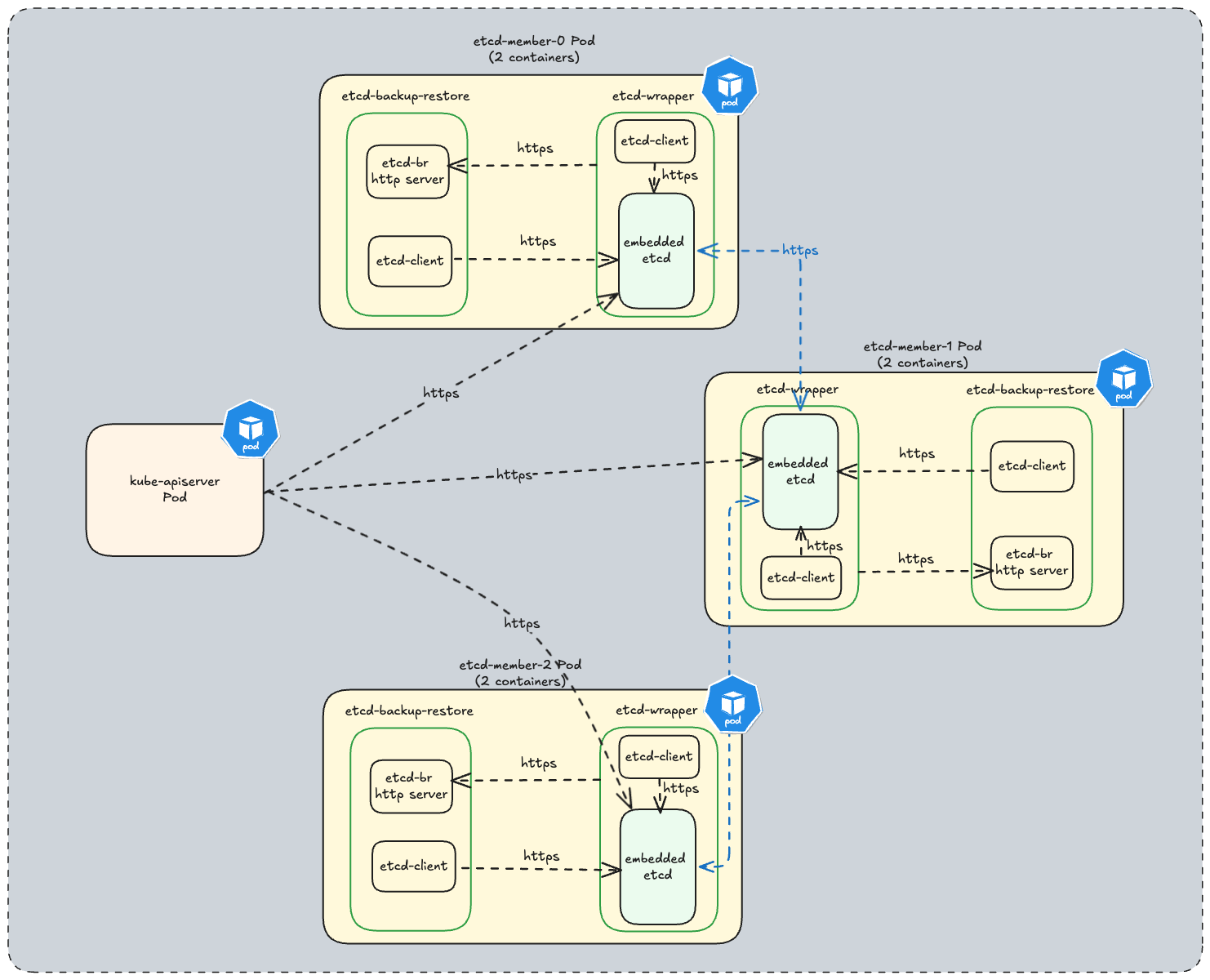
In order to undertand all the TLS artifacts that are required to setup etcd-druid and one or more etcd-clusters, one must have a clear view of all the communication channels that needs to be protected via TLS. In the diagram below all communication lines in a typical 3-node etcd cluster along with kube-apiserver and etcd-druid is illustrated.
Info
For Gardener setup all the communication lines are TLS enabled.
TLS artifacts
An etcd cluster setup by etcd-druid leverages the following TLS artifacts:
- Certificate Authority used to sign server and client certificate key-pair for
etcd-backup-restorespecified viaetcd.spec.backup.tls.tlsCASecretRef. - Server certificate key-pair specified via
etcd.spec.backup.tls.serverTLSSecretRefused byetcd-backup-restoreHTTPS server. - Client certificate key-pair specified via
etcd.spec.backup.tls.clientTLSSecretRefused byetcd-wrapperto securely communicate to theetcd-backup-restoreHTTPS server. - Certificate Authority used to sign server and client certificate key-pair for
etcdandetcd-wrapperspecified viaetcd.spec.etcd.clientUrlTls.tlsCASecretReffor etcd client communication. - Server certificate key-pair specified via
etcd.spec.etcd.clientUrlTls.serverTLSSecretRefused byetcdandetcd-wrapperHTTPS servers. - Client certificate key-pair specified via
etcd.spec.etcd.clientUrlTls.clientTLSSecretRefused by: etcd-wrapperandetcd-backup-restoreto securely communicate to theetcdHTTPS server.-
etcd-backup-restoreto securely communicate to theetcd-wrapperHTTPS server. -
Certificate Authority used to sign server certificate key-pair for
etcdpeer communication specified viaetcd.spec.etcd.peerUrlTls.tlsCASecretRef. - Server certificate key-pair specified via
etcd.spec.etcd.peerUrlTls.serverTLSSecretRefused foretcdpeer communication.
Note
TLS artifacts should be created prior to creating Etcd clusters. etcd-druid currently does not provide a convenience way to generate these TLS artifacts. etcd recommends to use cfssl to generate certificates. However you can use any other tool as well. We do provide a convenience script for local development here which can be used to generate TLS artifacts. Currently this script is part of etcd-wrapper github repository but we will harmonize these scripts to be used across all github projects under the etcd-druid ecosystem.
Skipping client-SAN verification on peer mTLS
For environments where peer client certificates intentionally omit Subject
Alternative Names (e.g. some certificate-management pipelines that issue
short-lived peer certificates without DNS / IP SANs), the peer-side mTLS
SAN check can be disabled by setting spec.etcd.peerUrlTls.skipClientSANVerification to true:
spec:
  etcd:
    peerUrlTls:
      tlsCASecretRef:
        name: peer-ca
        dataKey: ca.crt
      serverTLSSecretRef:
        name: peer-server
      skipClientSANVerification: true
Notes:
- The field is peer-only by type — it lives on
PeerTLSConfig, the wrapper type used exclusively atspec.etcd.peerUrlTls. The sharedTLSConfigused byclientUrlTlsandbackup.tlsdoes not expose it, so the field cannot be set on the client- or backup-restore TLS blocks. - The CA-based identity check still applies. Any peer certificate signed by the configured peer CA is accepted regardless of its SAN; certificates signed by other CAs are still rejected. Only enable this knob if you understand the trust implications of trusting the CA's full issuance set.